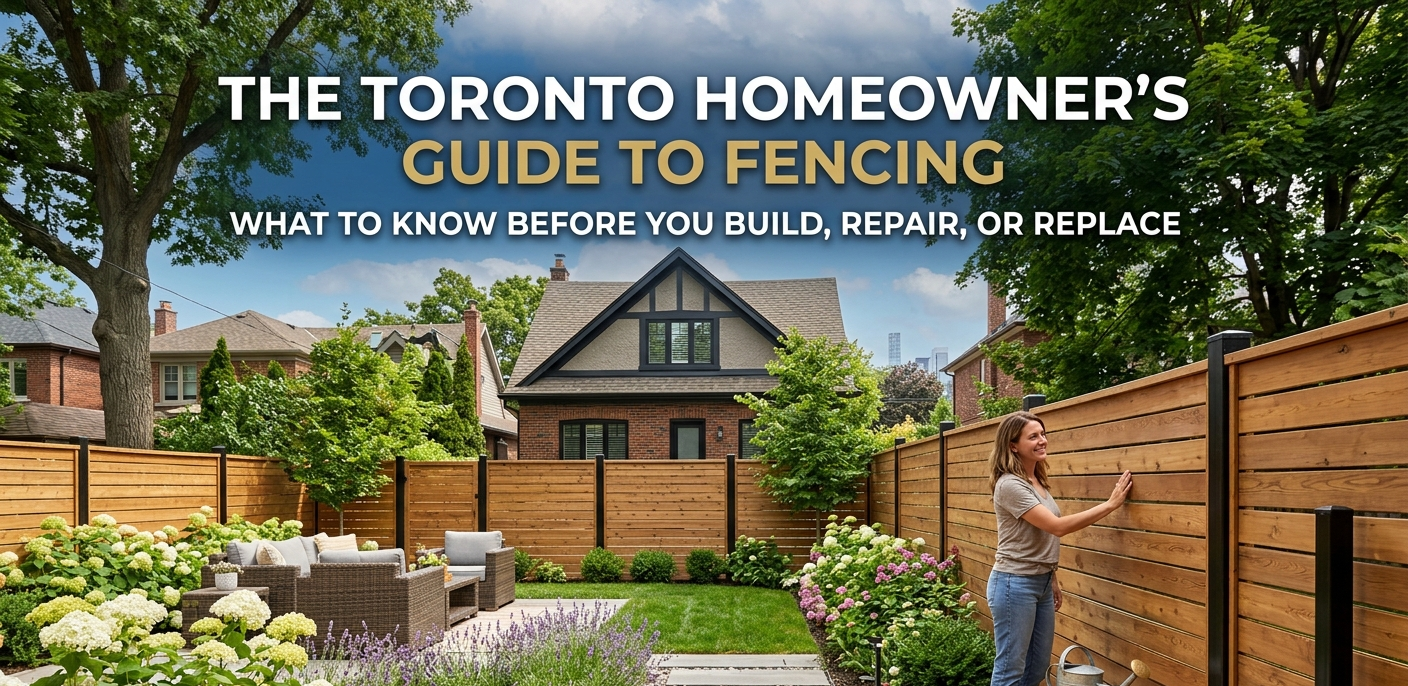
The Toronto Homeowner’s Guide to Fencing: What to Know Before You Build, Repair, or Replace
Toronto Fencing Guide for Homeowners — Learn the best fence materials for GTA weather, understand Toronto fence by laws, avoid common installation mistakes, and follow a seasonal maintenance plan to keep your fence strong and beautiful. Ideal for anyone planning to build, repair, or replace a fence in Toronto or the GTA.
Toronto & GTA Fence Guide
A good fence in Toronto does more than mark property lines—it boosts curb appeal, improves privacy, increases safety, and adds real value to your home. But fencing in the GTA comes with unique challenges: strict bylaws, harsh weather, and soil conditions that can shift dramatically through the seasons. Whether you're planning a new installation or maintaining an older fence, this guide gives Toronto homeowners everything they need to make smart, long‑lasting decisions.
1. Understand Toronto’s Fence Bylaws Before You Start
Toronto has clear rules on fence height, placement, and materials depending on where the fence sits on your property. For example, front‑yard fences near a public street are limited to 1.2 metres, while side and backyard fences can go up to 2.0 metres, and even 2.5 metres next to lanes or walkways. Pool enclosures have their own strict requirements and require permits. Staying compliant prevents costly tear‑downs and neighbour disputes.
2. Toronto Weather Is Tough on Fences—Plan for It
The GTA’s freeze–thaw cycles, heavy snow, humidity, and strong winds all take a toll. These conditions commonly cause:
- Leaning posts from shifting soil
- Wood rot from trapped moisture
- Rust on metal fencing
- Loose panels and fasteners from seasonal expansion and contraction
Regular inspections and early repairs prevent small issues from turning into full replacements.
3. Seasonal Fence Maintenance Checklist (GTA‑Specific)
Spring- Check for frost heave
- Clean off salt and mildew
- Re‑seal or stain wood
- Tighten screws and hinges
- Check for insect damage
- Trim vegetation touching the fence
- Repair cracks or leaning posts
- Apply protective coatings
- Clear debris to prevent moisture buildup
- Avoid piling snow against the fence
- Inspect after storms
- Keep salt away from the base
4. Be a Good Neighbour—It Matters in Toronto
While you don’t need permission to build a fence on your property, sharing your plans with neighbours helps avoid conflict. Confirm property lines with a surveyor—many disputes come from incorrect assumptions. Also consider neighbourhood aesthetics or HOA rules if applicable.
5. Choosing the Right Fence Material for Toronto Homes
- Wood: Classic look, great privacy, but needs sealing and maintenance.
- Pressure‑treated lumber: More durable against moisture.
- Vinyl/PVC: Low maintenance, weather‑resistant, long lifespan.
- Metal (aluminum/steel): Strong, modern, but watch for rust in older installations.
- Composite: High durability, premium price, excellent for long‑term value.
6. When to Repair vs. Replace
Repair if:- Only a few boards or panels are damaged
- Posts are still solid
- Rust is surface‑level
- Multiple posts are leaning
- Rot has spread
- The fence is over 15–20 years old
- You want to upgrade privacy or curb appeal
Final Thoughts
A well‑built, well‑maintained fence is one of the best investments a Toronto homeowner can make. With the right materials, proper installation, and seasonal care, your fence can withstand the GTA’s climate and stay beautiful for years. Whether you're upgrading for privacy, safety, or aesthetics, understanding the local rules and conditions ensures your project goes smoothly.