Basement Waterproofing in the GTA: Costs, Methods, and What Homeowners Need to Know in 2026
Basement water issues are one of the most common and expensive problems GTA homeowners face. Between heavy rainfall, aging foundations, high water tables, and clay soil that expands and contracts, moisture intrusion is almost inevitable — especially in homes built before the 1990s. Waterproofing isn’t just about stopping leaks; it’s about protecting your home’s structure, air quality, and long‑term value.
This guide breaks down the three major waterproofing methods used in the Greater Toronto Area: interior waterproofing, exterior waterproofing, and foundation crack repair. You’ll learn what each method costs, when it’s appropriate, how it works, and how to avoid the most common homeowner mistakes.
Waterproofing is not one-size-fits-all. The right solution depends on the source of the water, the age of the home, soil conditions, and whether the issue is structural or moisture-related.
Let’s go deep into each method so you can make the right decision for your home.
Interior Waterproofing
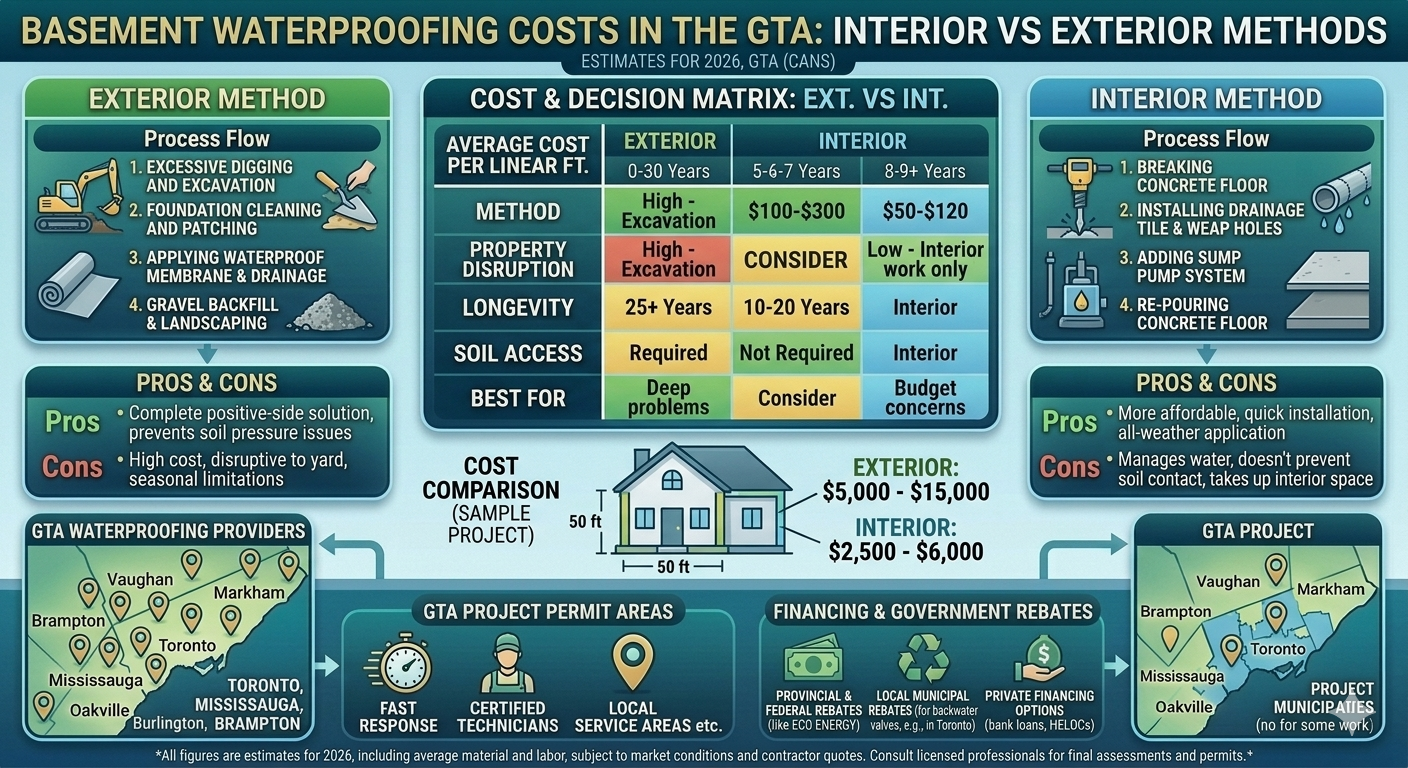
Interior waterproofing is the most common and cost-effective solution for GTA basements. It’s designed to manage water that enters through the foundation walls or floor by redirecting it into a drainage system and pumping it out of the home.
For most homeowners, this is the first line of defense against hydrostatic pressure — the force of groundwater pushing against your foundation.
Typical Cost in the GTA- $5,000–$12,000 for a standard basement
- Price varies based on basement size, wall condition, and sump pump setup
Interior waterproofing is significantly less disruptive than exterior excavation and can be completed in 1–3 days depending on the scope of work.
What Interior Waterproofing Includes- Breaking the concrete floor around the perimeter
- Installing new weeping tile (interior drainage system)
- Adding a sump pump and discharge line
- Installing a waterproof membrane on interior walls
- Re-pouring the concrete floor
This system does not stop water from entering the foundation — instead, it manages it safely and efficiently.
Interior waterproofing is ideal for hydrostatic pressure issues, basement dampness, minor seepage, and homes where exterior excavation is not possible.Advantages of Interior Waterproofing
- Lower cost compared to exterior waterproofing
- Minimal disruption to landscaping
- Effective for most water intrusion issues
- Fast installation
- Works well in older GTA homes with porous concrete
- Does not protect the exterior foundation walls
- Water still enters the foundation before being redirected
- Requires electricity for the sump pump
- May require a backup battery system
Interior waterproofing is the most common choice for homeowners dealing with basement dampness, minor leaks, or water pooling along the floor-wall joint.
Exterior Waterproofing
Exterior waterproofing is considered the “gold standard” because it stops water before it ever reaches your foundation. This method involves excavating around the outside of the home, repairing the foundation walls, and installing a full waterproofing system.
While extremely effective, it is also the most expensive and disruptive option.
Typical Cost in the GTA- $15,000–$35,000 depending on home size, depth, and landscaping
- Costs increase for deeper foundations, tight access, or concrete walkways
Exterior waterproofing is often recommended for severe water intrusion, foundation deterioration, or homes with major structural concerns.
What Exterior Waterproofing Includes- Full excavation down to the footing
- Cleaning and repairing foundation walls
- Applying waterproof membranes and sealants
- Installing exterior weeping tile
- Adding drainage gravel and filter fabric
- Backfilling and restoring landscaping
Exterior waterproofing is the only method that prevents water from touching your foundation walls — but it comes with a high price and major disruption.Advantages of Exterior Waterproofing
- Stops water before it enters the home
- Protects foundation walls from long-term deterioration
- Addresses structural issues during excavation
- Long-lasting solution (20–50 years)
- Most expensive waterproofing method
- Requires excavation around the home
- Can damage landscaping, driveways, and walkways
- Not always possible in tight urban lots
Exterior waterproofing is best for homes with severe water intrusion, crumbling foundation walls, or major structural concerns.
Foundation Crack Repair
Foundation cracks are extremely common in the GTA, especially in homes built before 1990. Concrete naturally expands and contracts with temperature changes, and over time, small cracks can form. While many cracks are harmless, some allow water to seep into the basement.
Crack repair is a targeted solution — not a full waterproofing system — but it is highly effective when the issue is isolated to one or two cracks.
Typical Cost in the GTA- $500–$1,500 per crack
- Price depends on crack size, location, and accessibility
Most contractors use polyurethane or epoxy injection to seal the crack from the inside out.
What Crack Repair Includes- Cleaning and prepping the crack
- Installing injection ports
- Injecting polyurethane or epoxy resin
- Sealing the surface
- Testing for leaks
Crack repair is ideal for isolated leaks — but it will not solve widespread water intrusion or hydrostatic pressure issues.Advantages of Crack Repair
- Fast and affordable
- Minimal disruption
- Effective for isolated cracks
- Often completed in under 2 hours
- Not a full waterproofing system
- Does not address water pressure around the foundation
- Multiple cracks may indicate deeper structural issues
Crack repair is perfect for small leaks but should not be used as a substitute for full waterproofing when larger issues exist.
How to Know Which Waterproofing Method You Need
Choosing the right waterproofing method depends on the source of the water and the condition of your foundation. Here’s how to determine the best solution for your home.
Choose Interior Waterproofing If:- You have water along the floor-wall joint
- Your basement feels damp or musty
- You see minor seepage during heavy rain
- You want a cost-effective solution
- Your exterior access is limited
- You have major water intrusion
- Your foundation walls are deteriorating
- You want the longest-lasting solution
- You are already excavating for another project
- Your home has severe grading or drainage issues
- You see water coming from a single crack
- The rest of the basement is dry
- The crack is visible and accessible
- You want a fast, inexpensive fix
The biggest mistake homeowners make is choosing the wrong solution — or paying for a full waterproofing system when a simple crack repair would have solved the problem.
Common Waterproofing Mistakes GTA Homeowners Should Avoid
Waterproofing is a major investment. Avoid these common mistakes to save money and prevent long-term damage.
1. Ignoring early signs of moisture- Musty smells
- Efflorescence (white powder on walls)
- Peeling paint
- Small puddles after rain
These are early warnings — not harmless inconveniences.
2. Choosing the cheapest contractor- Unlicensed or uninsured workers
- No written warranty
- Low-quality materials
- Improper installation
Waterproofing done incorrectly can cost tens of thousands to fix.
3. Assuming crack repair solves everything- Cracks are often symptoms, not causes
- Hydrostatic pressure requires a drainage system
- Multiple cracks may indicate structural issues
- Power outages during storms are common
- Without a backup, your basement can flood instantly
- Improper grading sends water toward the home
- Short downspouts dump water at the foundation
90% of basement leaks start with poor drainage outside the home — not the foundation itself.
Final Takeaway for GTA Homeowners
Basement waterproofing is one of the most important investments you can make in your home. Whether you choose interior waterproofing, exterior excavation, or simple crack repair, the key is understanding the source of the problem and choosing the right solution.
Interior waterproofing is the most common and cost-effective method. Exterior waterproofing is the gold standard for severe issues. Crack repair is perfect for isolated leaks. Each method has its place — and choosing correctly can save you thousands of dollars.
The smartest homeowners don’t wait for a flood. They fix moisture issues early, choose the right waterproofing method, and protect their home’s foundation for decades.